Negotiation: it’s a skill we all use, whether haggling at a market or closing a million-dollar deal. But are you truly maximizing your potential? This guide delves into the art of negotiation, offering practical strategies to transform your approach and consistently secure the best possible outcomes. We’ll explore various negotiation styles, effective communication techniques, and the crucial role of emotional intelligence in achieving your desired results.
Prepare to unlock your inner negotiator and confidently navigate even the most challenging deals.
From understanding your personal negotiation strengths and weaknesses to mastering persuasive techniques and building strong rapport, we provide a comprehensive roadmap for success. We’ll move beyond theoretical concepts, offering real-world examples and practical exercises to help you immediately implement these strategies in your own negotiations. This isn’t just about getting a better price; it’s about developing a skill set that empowers you in all aspects of life.
Understanding Your Negotiation Style
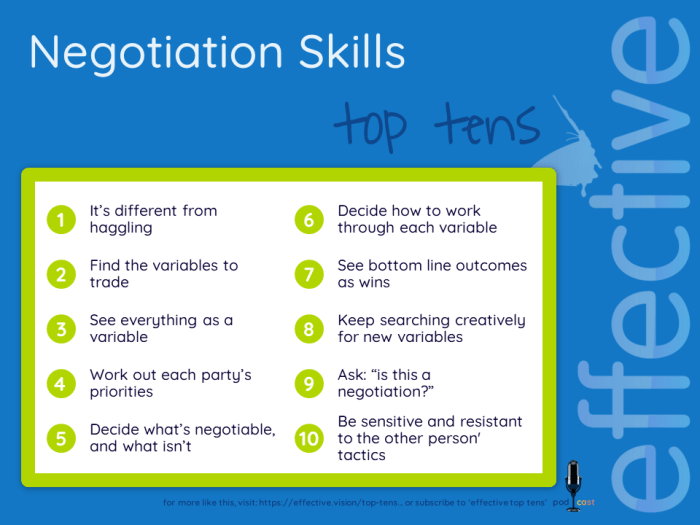
Effective negotiation isn’t about inherent talent; it’s a skill honed through self-awareness and strategic planning. Understanding your natural negotiation style is the crucial first step towards achieving better outcomes. Recognizing your strengths and weaknesses allows you to leverage your advantages and mitigate potential pitfalls. This self-assessment forms the bedrock of a personalized negotiation strategy designed for optimal success.Identifying your current negotiation strengths and weaknesses requires honest introspection.
Consider past negotiations: What tactics worked best? Where did you falter? Did you tend towards compromise or confrontation? Were you assertive in presenting your needs, or did you prioritize maintaining the relationship above securing the best deal? Journaling about past experiences can provide valuable insights into your habitual patterns and tendencies.
Negotiation Style Comparison
Three common negotiation styles are competitive, collaborative, and accommodating. A competitive style prioritizes winning at all costs, often employing aggressive tactics. A collaborative approach focuses on finding mutually beneficial solutions, emphasizing open communication and compromise. An accommodating style prioritizes maintaining positive relationships, sometimes at the expense of securing optimal results. Each style has its place; the key is understanding which style best aligns with your personality and the specific context of the negotiation.
Personalized Negotiation Strategy Development
Based on your self-assessment, a personalized strategy can be designed. For example, if you identify a tendency towards being overly accommodating, your strategy might involve practicing assertive communication techniques and setting clear boundaries. Conversely, if you lean towards a competitive approach, focusing on building rapport and exploring collaborative options could improve outcomes and foster stronger relationships. This tailored approach ensures you leverage your strengths while actively working to improve areas needing development.
Emotional Intelligence’s Impact on Negotiation
Emotional intelligence significantly impacts negotiation outcomes. Self-awareness—understanding your own emotions and how they influence your behavior—is paramount. Empathy, the ability to understand and share the feelings of others, allows you to anticipate their needs and motivations. Self-regulation, managing your emotions effectively, prevents impulsive reactions that could derail negotiations. Effective communication, both verbal and nonverbal, builds trust and facilitates productive discussions.
By mastering these aspects of emotional intelligence, negotiators can create a more conducive environment for achieving favorable results.
Collaborative Negotiation Scenario
Imagine a scenario where two businesses are negotiating a joint venture. A collaborative approach would involve open communication from the start. Both parties would clearly articulate their goals, needs, and concerns. They would actively listen to each other, seeking to understand each other’s perspectives. Instead of focusing solely on their own desired outcomes, they would explore options that create mutual value.
This might involve identifying synergies, sharing resources, and compromising on certain aspects to achieve a mutually beneficial agreement. The outcome would likely be a stronger, more sustainable partnership built on trust and understanding, rather than a transactional agreement born from competition.
Mastering Negotiation Techniques
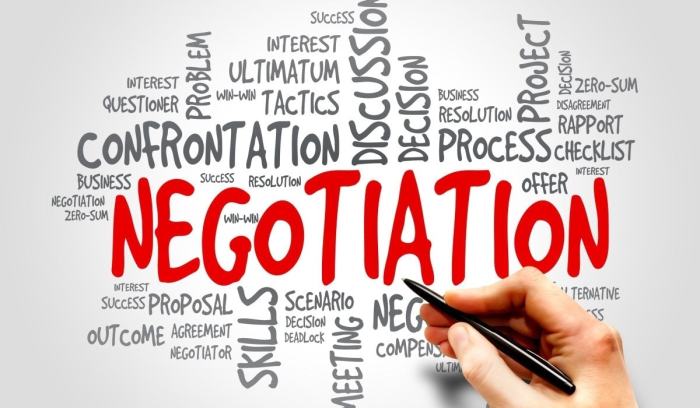
Effective negotiation is not about winning or losing; it’s about achieving mutually beneficial outcomes. Mastering key techniques significantly improves your ability to secure favorable deals while maintaining positive relationships. This section details a structured approach to negotiation, emphasizing preparation, rapport building, active listening, and effective presentation of arguments.
Preparing for a Negotiation
Thorough preparation is crucial for a successful negotiation. A well-defined strategy increases your confidence and improves your chances of achieving your desired outcome. This involves several key steps. First, clearly define your goals and desired outcome. What are your minimum acceptable terms, and what would constitute an ideal result?
Second, research the other party. Understand their needs, priorities, and potential motivations. This research may involve examining their past deals, public statements, or even speaking with individuals who have interacted with them before. Third, anticipate potential objections and develop counterarguments. Finally, practice your presentation.
Rehearsing your key points and arguments helps you deliver them confidently and effectively.
Strategies for Building Rapport
Building rapport is essential for fostering trust and cooperation, which are vital for a successful negotiation. Five effective strategies include: finding common ground, showing genuine interest in the other party’s perspective, using active listening techniques, mirroring body language subtly (to build subconscious connection), and demonstrating empathy and understanding. By creating a positive and collaborative atmosphere, you increase the likelihood of reaching a mutually agreeable solution.
For instance, starting a conversation with a shared interest, such as a comment about the weather or a recent news event, can help break the ice and create a more relaxed atmosphere.
The Importance of Active Listening
Active listening is more than simply hearing what the other party says; it involves fully understanding their perspective, needs, and concerns. This involves paying close attention to both verbal and nonverbal cues, asking clarifying questions, summarizing their points to ensure understanding, and responding thoughtfully. Active listening demonstrates respect, builds trust, and allows you to identify potential areas of compromise.
For example, paraphrasing the other party’s statements (“So, if I understand correctly, your main concern is…”) shows you are engaged and actively trying to comprehend their viewpoint.
Presenting Arguments and Proposals
Effectively presenting your arguments and proposals is critical to persuading the other party. This involves structuring your presentation logically, supporting your claims with evidence and data, highlighting the benefits of your proposals, and addressing potential concerns proactively. A clear and concise presentation, delivered with confidence and conviction, significantly increases your chances of success. For instance, using visual aids like charts or graphs can make complex information more easily digestible and impactful.
Handling Objections
Different objections require different approaches. The following table Artikels several tactics:
| Objection Type | Tactic | Example | Outcome |
|---|---|---|---|
| Price is too high | Highlight value proposition, offer alternative solutions (e.g., payment plan) | “While the initial price may seem high, consider the long-term benefits and cost savings.” | Potential agreement on a modified price or alternative solution. |
| Lack of trust | Build rapport, provide references, showcase expertise | “We have a proven track record of success with similar projects. May I share some testimonials?” | Increased trust and willingness to negotiate. |
| Unrealistic deadlines | Explain constraints, propose alternative timeline, compromise | “While that deadline is challenging, we can deliver key milestones by [date].” | Agreement on a revised timeline. |
| Unclear terms | Clearly define terms, provide written documentation | “Let’s review the contract together to ensure we are both on the same page.” | Clearer understanding and reduced risk of misunderstandings. |
Achieving the Best Deal
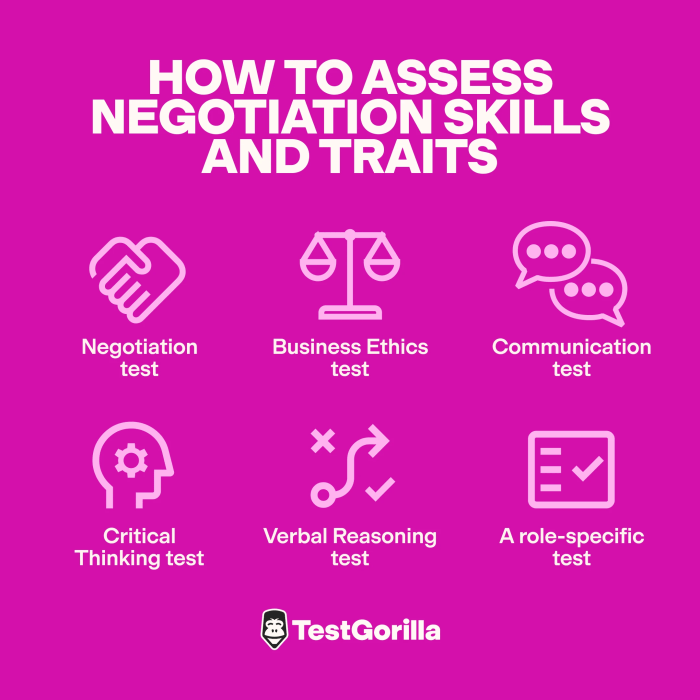
Securing the best possible deal in any negotiation requires a clear understanding of your goals, a strategic approach to concessions, and the skillful application of persuasive techniques. This section will Artikel the key steps to achieving this optimal outcome.
Successfully navigating a negotiation hinges on defining your ideal outcome and establishing a firm, yet flexible, walk-away point. Understanding these two crucial elements allows you to assess offers objectively and make informed decisions throughout the process. Strategic concession-making is also vital, ensuring you don’t give away too much while still maintaining a positive relationship with the other party.
Finally, mastering persuasive techniques can significantly increase your chances of achieving your desired result.
Identifying Ideal Outcome and Walk-Away Point
Defining your ideal outcome involves specifying your best-case scenario. This should be a detailed and realistic expectation, not just a wishful thought. For example, in purchasing a car, your ideal outcome might be securing the vehicle at a price $2,000 below the sticker price, with a three-year warranty included. Your walk-away point, conversely, is the absolute minimum you’re willing to accept before abandoning the negotiation.
This might be $3,000 below sticker price, without the warranty. Having a clearly defined walk-away point prevents you from accepting unfavorable terms simply to reach an agreement.
Strategic Concession-Making
Making concessions strategically is crucial to a successful negotiation. Avoid making large concessions early, as this weakens your position. Instead, begin with smaller concessions, reserving larger ones for later in the process. It’s also important to link concessions to reciprocal actions from the other party. For instance, you might offer a slight price reduction in exchange for a faster delivery date.
This reciprocity fosters a sense of fairness and cooperation. Never make concessions without receiving something of equal or greater value in return.
Powerful Persuasive Techniques
Several persuasive techniques can significantly improve your negotiation outcomes. One powerful approach is framing. Instead of focusing solely on price, frame the deal in terms of the overall value proposition. For example, instead of saying “The price is too high,” try, “Considering the long-term benefits and features, this price seems a little steep compared to the market value.” Another effective technique is the use of silence.
After making an offer or counter-offer, allowing a period of silence can often prompt the other party to reconsider their position. Finally, employing active listening and empathetic communication fosters a collaborative atmosphere, making it more likely to reach a mutually beneficial agreement.
Successful Negotiation Example
Consider a scenario where a small business owner is negotiating a lease for a new office space. Their ideal outcome is a five-year lease at $1,500 per month, with an option to renew. Their walk-away point is a seven-year lease at $1,700 per month, with no renewal option. Initially, the landlord offers a five-year lease at $1,800. The business owner counters with $1,600, emphasizing the long-term commitment and potential for increased rent in future years.
The landlord then offers $1,700, and the business owner, seeing the potential to secure a five-year lease, agrees. The key decision point was recognizing that the $1,700 offer, while above their ideal outcome, was still below their walk-away point and offered significant long-term value.
Post-Negotiation Actions
After reaching an agreement, several actions are crucial to solidify the deal.
- Immediately confirm the agreement in writing, detailing all agreed-upon terms and conditions.
- Obtain all necessary signatures and documentation.
- Review the agreement thoroughly to ensure it accurately reflects the agreed-upon terms.
- Set up a clear timeline for the implementation of the agreement.
- Maintain open communication with the other party to address any emerging issues.
Final Conclusion
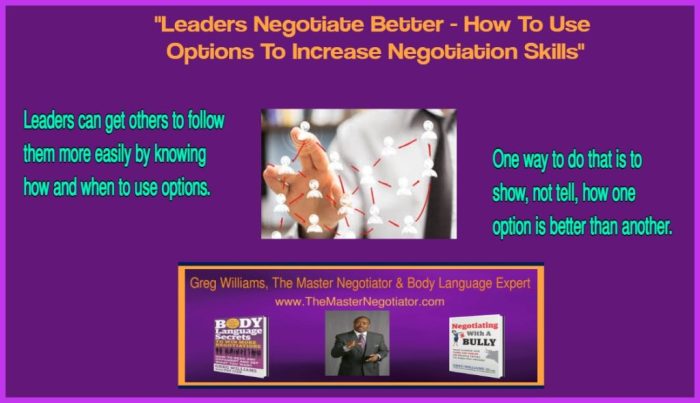
Mastering negotiation is a journey, not a destination. By understanding your style, honing your techniques, and consistently refining your approach, you can significantly improve your ability to secure favorable outcomes. Remember, effective negotiation is about building relationships, understanding perspectives, and strategically achieving mutually beneficial agreements. This guide provides the tools; now it’s up to you to apply them and unlock your full negotiation potential.
Embrace the challenge, refine your skills, and confidently pursue the best deals possible.