Unlock the full potential of your music library by mastering your audio settings. This guide delves into optimizing playback across various devices and platforms, from fine-tuning equalizer settings to exploring advanced audio features. Learn how to personalize your listening experience, ensuring your favorite tunes sound their absolute best, regardless of where or how you listen.
We’ll cover everything from adjusting bass and treble to understanding different audio codecs and formats. Discover how to sync your settings across multiple devices, create custom audio profiles for different environments, and even leverage advanced features like spatial audio for an immersive listening experience. Prepare to transform your everyday music enjoyment.
Optimizing Audio Playback Settings
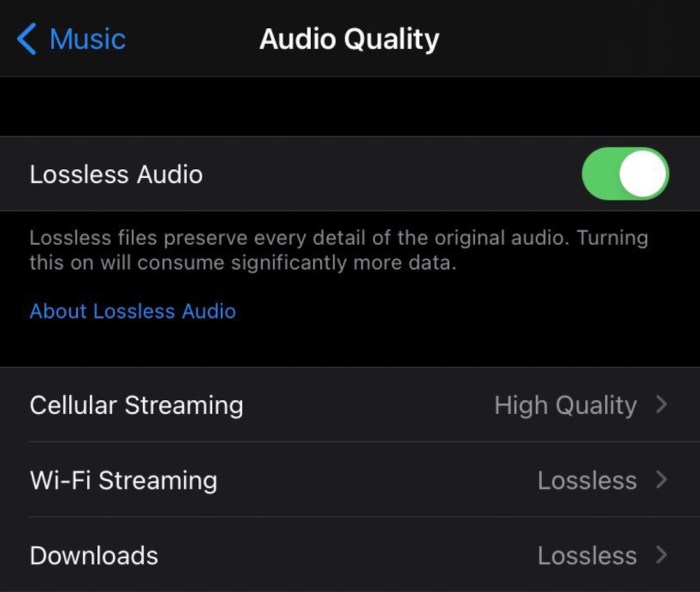
Getting the most out of your music involves understanding how your audio setup interacts with your music files. Different devices and settings can dramatically impact the sound quality, so optimizing these aspects is key to enjoying your favorite tunes to their fullest potential. This section will guide you through adjusting your audio settings for an enhanced listening experience.
Audio Output Device Considerations
The type of device you use to listen to music significantly affects the sound. Headphones, speakers, and car stereos all have unique characteristics that require different settings for optimal sound. Headphones often offer a more intimate and detailed listening experience, capable of reproducing a wider range of frequencies. Speakers, on the other hand, tend to be more affected by their placement in a room, with bass response varying significantly based on room acoustics.
Car stereos, typically designed for a louder listening environment, often prioritize clarity and punch over subtle nuances. Adjusting your equalizer settings or other audio enhancements to compensate for these differences is crucial. For example, you might boost bass slightly on smaller speakers to compensate for their limited low-frequency response, while reducing bass on headphones to prevent muddiness.
Equalizer Settings for Various Music Genres
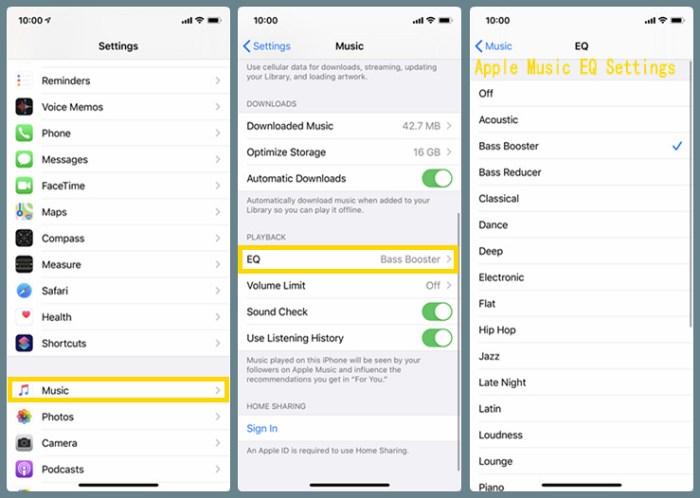
Equalizers allow you to adjust the balance of different frequencies (bass, mid-range, and treble) in your music. Adjusting these settings can greatly enhance your listening experience, tailoring the sound to your preference and the specific genre. A good starting point is often a flat equalizer setting, meaning all frequencies are at 0 dB. However, experimenting with different settings can yield dramatic results.
For instance, boosting the bass slightly can add warmth and depth to genres like hip-hop or electronic music, while increasing treble can bring out the clarity and detail in acoustic or classical music. Mid-range adjustments are typically less dramatic but can be used to enhance vocals or specific instrumental parts. Remember, the ideal settings are subjective and depend on personal preference and the specific music you’re listening to.
Maximizing Volume Without Distortion
Listening at excessively high volumes can lead to audio distortion, damaging your hearing and diminishing the quality of your music. Volume normalization and limiting are useful techniques to control volume levels effectively. Volume normalization adjusts the overall volume of different tracks to a consistent level, preventing sudden loud or quiet passages. Limiting prevents the audio signal from exceeding a specific threshold, preventing clipping and distortion, even at high volumes.
Most music players offer built-in volume normalization features, and many allow for the adjustment of a limiter threshold. By employing these techniques, you can enjoy your music at a comfortable volume without compromising audio quality.
Comparison of Music Streaming Service Audio Settings
| Service Name | Equalizer Options | Spatial Audio Features | Lossless Audio Support |
|---|---|---|---|
| Spotify | Customizable equalizer with frequency bands | Dolby Atmos (subscription required) | Yes (Spotify HiFi, subscription required) |
| Apple Music | Customizable equalizer with frequency bands | Spatial Audio with Dolby Atmos (included in subscription) | Yes (included in subscription) |
| YouTube Music | Basic equalizer with presets | No | No |
Personalizing Music Experience Across Devices
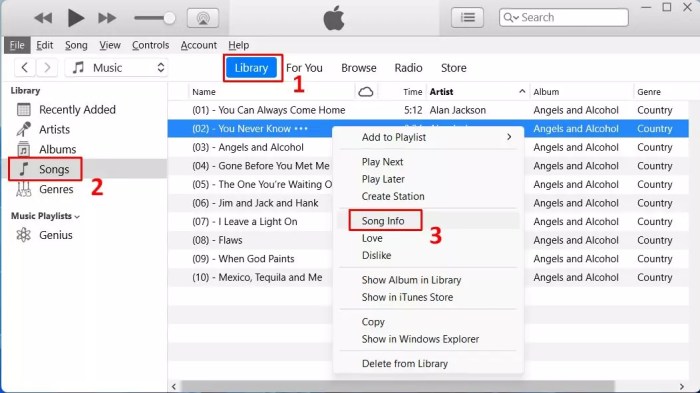
Enjoying your favorite music consistently across all your devices is crucial for a seamless listening experience. Differences in operating systems, audio hardware, and app versions can lead to variations in sound quality and playback features. This section will guide you through strategies to harmonize your music settings across various platforms and create a truly personalized listening experience.
Maintaining Consistent Music Settings Across Devices
Different devices – smartphones, computers, smart speakers – often have unique audio settings. Smartphones typically offer equalizer adjustments, volume normalization, and sometimes spatial audio features. Computers provide more granular control over audio output devices and advanced equalizer options. Smart speakers, while simpler to use, usually lack the detailed customization available on other platforms. To maintain consistency, prioritize using the same music streaming service across all devices.
This ensures your playlists and settings are readily available everywhere. Furthermore, adjusting the overall equalizer settings on your primary device (e.g., your phone) and then using the presets or similar settings on other devices will create a more cohesive listening experience. If fine-grained control is desired, you may need to manually adjust settings on each device individually to match your preferred sound profile.
Syncing Playlists and Settings Across Devices
Seamless playlist synchronization is key to a unified music experience. Most popular music streaming services (Spotify, Apple Music, YouTube Music, etc.) offer cloud-based synchronization. Once you create a playlist or adjust settings on one device, the changes will usually propagate to your other devices automatically, provided you’re logged into the same account. However, it’s essential to ensure that the app is updated to the latest version on all devices to guarantee compatibility and prevent syncing issues.
For locally stored music files, consider using cloud storage services (like Google Drive or Dropbox) to access your music library across all your devices. This allows you to keep your playlists organized and readily accessible, even if the music isn’t directly integrated with your music player app.
Creating Custom Audio Profiles for Different Environments
To optimize your listening experience for various environments, creating custom audio profiles is beneficial. For example, a bass-heavy profile might be ideal for workouts, while a more balanced profile might be better suited for home listening. Most music players and equalizer apps allow you to save custom presets. Start by defining your desired sound signature for each environment (home, commute, workout, etc.).
Then, adjust the equalizer settings (bass, treble, midrange) accordingly on your primary device. Save these custom profiles with descriptive names. You might want to consider adjusting the volume normalization settings as well, depending on the variability of sound levels in your different listening environments. Finally, replicate these settings (as closely as possible) on your other devices using similar presets or manual adjustments.
Utilizing Device-Specific Audio Features
Many modern devices offer advanced audio features to enhance the listening experience. Audio spatialization, sometimes referred to as 3D sound or immersive audio, attempts to create a more realistic and expansive soundscape. This technology uses algorithms to place virtual sound sources in a three-dimensional space, making the music sound more natural and less confined. For example, Apple’s Spatial Audio uses head tracking to adjust the sound field based on your head movements, creating a more personalized and immersive experience.
Similarly, Dolby Atmos on some Android devices and speakers employs object-based audio to create a more detailed and realistic soundscape. These features are usually found in the settings menu of your music app or device’s system settings. Activating them often requires compatible headphones or speakers, and the effect can vary depending on the quality of the audio source and the device’s capabilities.
Experiment to find the settings that best suit your preferences.
Epilogue
By implementing the techniques and strategies Artikeld in this guide, you can significantly enhance your music listening experience. From optimizing audio playback settings on your various devices to exploring advanced audio features and personalizing your sound profile, you now possess the knowledge to transform how you enjoy your favorite tunes. Experiment with different settings, discover your preferred audio configurations, and revel in the superior sound quality that awaits.