Transforming your e-commerce store’s layout isn’t just about aesthetics; it’s a strategic move to boost sales. By understanding customer behavior and optimizing your website’s design, you can significantly improve conversion rates. This guide explores how to analyze your current layout, identify areas for improvement, and implement changes that drive more sales.
We’ll delve into practical techniques for enhancing product discovery, utilizing whitespace effectively, and choosing the right navigation structure. Furthermore, we’ll cover crucial implementation steps, including A/B testing and KPI monitoring, to ensure your changes yield positive results and a demonstrable return on investment.
Understanding Your Current Layout & Customer Behavior
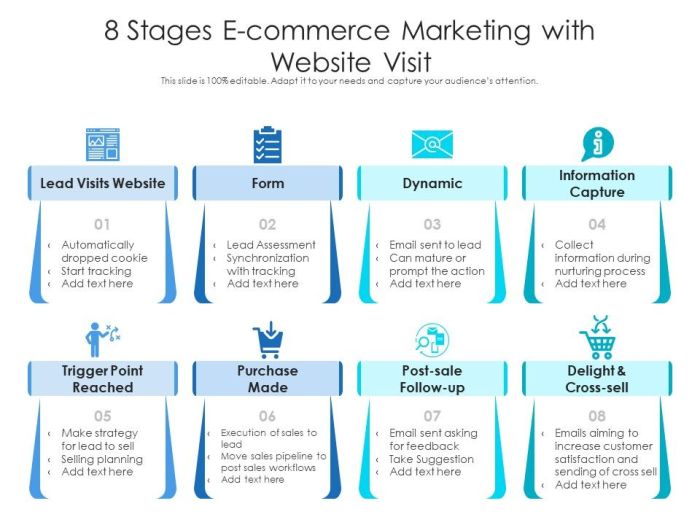
Let’s analyze a fictional e-commerce store, “GreenThumb Gardens,” specializing in gardening supplies. We’ll examine its current layout, customer journey, and identify areas for improvement to boost sales. Understanding these aspects is crucial for effective layout optimization.
GreenThumb Gardens’ Current Layout and Metrics
GreenThumb Gardens currently uses a three-column layout. The left column features product categories, the center displays featured products and rotating banners, and the right column shows bestsellers and customer testimonials. While this layout is visually appealing, certain areas require attention. The following table summarizes user engagement metrics across different sections:
| Section | Bounce Rate | Average Session Duration | Conversion Rate |
|---|---|---|---|
| Homepage | 25% | 1 minute 30 seconds | 1% |
| Product Pages | 15% | 2 minutes | 5% |
| Category Pages | 30% | 1 minute | 2% |
| Checkout | 5% | 3 minutes | 80% |
These metrics reveal that category pages have a high bounce rate, suggesting navigation or product presentation issues. The low conversion rate on the homepage indicates a need for more compelling calls to action. Conversely, the high conversion rate at checkout suggests the checkout process itself is efficient.
Customer Journey Flowchart
The typical customer journey at GreenThumb Gardens can be illustrated as follows:Imagine a flowchart. The starting point is “Landing on Homepage.” This branches to “Browsing Product Categories,” “Viewing Featured Products,” or “Leaving Website.” “Browsing Product Categories” leads to “Viewing Product Pages,” which then branches to “Adding to Cart” or “Leaving Website.” “Viewing Featured Products” also leads to “Viewing Product Pages,” which again branches to “Adding to Cart” or “Leaving Website.” “Adding to Cart” leads to “Reviewing Cart,” which leads to “Proceeding to Checkout.” “Proceeding to Checkout” leads to “Completing Purchase” or “Abandoning Cart.” “Leaving Website” is a dead end.
“Completing Purchase” is the final stage.
Key Areas Hindering Sales
Three key areas in GreenThumb Gardens’ current layout are hindering sales:
1. Poor Category Page Navigation
The category pages are cluttered and lack clear visual hierarchy. Customers struggle to find specific products within each category, leading to frustration and high bounce rates. For example, the “Seeds” category lists hundreds of seed varieties without effective filtering or sorting options.
2. Unclear Call to Actions
The homepage lacks strong calls to action (CTAs). While featuring products, there is no compelling incentive to click and explore further. Adding prominent CTAs such as “Shop Now,” “View Our Bestsellers,” or “Browse New Arrivals” would encourage more engagement.
3. Lack of Product Visuals
Many product pages feature only small, low-resolution images. This limits customers’ ability to appreciate the products fully, hindering their decision to purchase. High-quality, multiple-angle images, along with zoom functionality, would significantly improve the shopping experience.
Optimizing Layout for Conversions

Optimizing your e-commerce store’s layout is crucial for driving sales. A well-designed layout guides customers seamlessly through the purchase journey, increasing the likelihood of conversion. This involves strategic placement of key elements, effective use of whitespace, and a clear product categorization system. Let’s explore how to achieve this.
Homepage Redesign for Improved Product Discovery and Purchases
A redesigned homepage should prioritize immediate product discovery and encourage purchases. The following elements should be strategically placed to achieve this goal.
- Search Bar: Prominently positioned at the top, ideally within the header, to allow for quick product searches. This caters to customers who know exactly what they’re looking for.
- Product Categories: Clearly displayed navigation menu, possibly below the search bar or in a prominent sidebar, allowing customers to easily browse through product categories. This should use clear, concise labels.
- Featured Products: High-quality images of best-selling or new products, strategically placed above the fold and within the main content area. Each image should include a compelling call-to-action, such as “Shop Now” or “Learn More”. The placement should be above the fold, where customers see it first.
- Call-to-Actions (CTAs): Multiple, strategically placed CTAs throughout the homepage, such as “Add to Cart,” “Buy Now,” and “View Details,” encouraging immediate purchases. These should be visually distinct with contrasting colors and clear text.
- Promotional Banners: Eye-catching banners highlighting special offers, discounts, or new arrivals. These should be strategically placed to grab attention without being overwhelming. Placement should consider visual hierarchy and not clutter the page.
Strategic Use of Whitespace and Visual Hierarchy
Whitespace, or negative space, is crucial for creating a clean and uncluttered design. It improves readability, emphasizes key elements, and guides the customer’s eye. Visual hierarchy uses size, color, and placement to prioritize important elements.For example, a homepage with ample whitespace around product images and CTAs will make those elements stand out, drawing the customer’s attention to the most important parts of the page.
Conversely, a cluttered homepage with too much information and little whitespace can be overwhelming and lead to customer frustration. Consider a minimalist design with ample whitespace around key product images and offers to create a clean and appealing look. The use of varying font sizes and bolding can also enhance visual hierarchy, emphasizing crucial information like product titles and prices.
Comparison of Hierarchical and Faceted Navigation for Product Categorization
Two common approaches to product categorization are hierarchical and faceted navigation.
- Hierarchical Navigation: This approach uses a tree-like structure, organizing products into broad categories and subcategories. This is simple to implement and understand, but can become cumbersome for stores with a large number of products and diverse categories. It’s best for stores with a relatively simple product range.
- Faceted Navigation: This allows customers to refine their search using multiple filters, such as color, size, price, and brand. This is ideal for stores with a vast product catalog, enabling customers to easily find specific products. However, it can be complex to implement and may require significant development effort.
For a fictional e-commerce store selling a wide variety of clothing, faceted navigation would likely be more effective. Customers can easily filter by size, color, brand, and price, quickly narrowing down their options. However, a hierarchical structure might be sufficient for a smaller store selling only a few types of products. The choice depends on the store’s size and complexity.
Implementing & Testing Changes

Successfully redesigning your e-commerce store’s layout requires a methodical approach to implementation and rigorous testing to validate its effectiveness. Failing to plan for these stages can lead to wasted resources and a negative impact on sales. A well-defined strategy ensures a smooth transition and provides valuable data to inform future optimizations.Implementing changes to a live e-commerce website requires careful planning and execution to minimize disruption to your business.
A phased rollout and thorough testing are crucial to prevent unforeseen problems and ensure a positive user experience. Moreover, the chosen approach should align with your available resources and technical expertise.
Step-by-Step Implementation Plan
The following steps Artikel a practical approach to implementing your revised layout, considering potential challenges and mitigating risks.
- Staging Environment Setup: Before making any changes to your live website, replicate your current store in a staging environment. This allows you to test the new layout thoroughly without affecting your live site’s functionality or user experience.
- Layout Implementation: Implement the revised layout in the staging environment. This may involve working with your website developers or using a website builder’s tools. Thoroughly review all aspects of the new design to ensure it aligns with your specifications and performs as expected.
- Internal Testing: Conduct internal testing to identify and fix any bugs or usability issues. Involve team members from different departments to gain diverse perspectives on the user experience.
- Phased Rollout: Instead of launching the changes all at once, consider a phased rollout. For example, initially release the new layout to a small segment of your customers (e.g., a specific geographic region or customer group). This allows you to monitor the impact of the changes on a smaller scale before a full launch.
- Monitoring & Adjustment: Continuously monitor key performance indicators (KPIs) during the phased rollout. If any issues arise, be prepared to quickly revert to the previous layout or make necessary adjustments.
- Full Launch: Once the phased rollout is successful and you’ve addressed any issues, launch the new layout to your entire customer base.
A/B Testing Methodology
A/B testing is crucial for objectively measuring the effectiveness of your layout changes. By comparing two versions of your website (A and B), you can determine which performs better based on key metrics.
Different A/B test variations might involve changes to:
- Homepage layout: Comparing different arrangements of hero images, product showcases, and calls to action.
- Product page design: Testing variations in product image presentation, descriptions, and add-to-cart buttons.
- Navigation menus: Evaluating the impact of different menu structures on user navigation and product discovery.
- Checkout process: Optimizing the checkout flow to reduce cart abandonment rates.
Key metrics to track during A/B testing include:
- Conversion rate: The percentage of visitors who complete a desired action (e.g., making a purchase).
- Bounce rate: The percentage of visitors who leave your website after viewing only one page.
- Average order value (AOV): The average amount spent per order.
- Click-through rate (CTR): The percentage of visitors who click on a specific element (e.g., a call to action button).
KPI Monitoring Plan
Post-implementation monitoring is vital to assess the long-term impact of your layout changes. Continuous tracking allows for further optimization and refinement of your website’s design.
| KPI | Measurement Method | Target Value |
|---|---|---|
| Conversion Rate | Google Analytics, internal analytics platform | Increase by 15% within 3 months |
| Average Order Value (AOV) | Internal analytics platform, order data | Increase by 10% within 3 months |
| Bounce Rate | Google Analytics | Decrease by 5% within 3 months |
| Customer Satisfaction (CSAT) | Surveys, customer feedback forms | Maintain a score above 80% |
| Cart Abandonment Rate | Internal analytics platform | Decrease by 10% within 3 months |
Conclusive Thoughts
Ultimately, optimizing your e-commerce store’s layout is an iterative process. By continuously analyzing customer behavior, testing different approaches, and closely monitoring key performance indicators, you can refine your website’s design to create a seamless and highly converting shopping experience. Remember, a well-designed layout isn’t a one-time fix but a dynamic element that should evolve with your business and customer needs.
Consistent improvement and adaptation are key to long-term success.